Mental Health Therapy: The Client Experience
You’ve taken the hardest step already.
You were honest with yourself, and now you are scheduled for a discovery call with a professional mental health therapist, and you are totally cool with it, not even a little bit nervous.
NOT
Guess what, being nervous? That's absolutely normal!
Your thoughts are racing and going a mile a minute.
What if she asks about something I don’t want to talk about? How should I respond? Is she just going to say it’s all in my head? Will she believe me? Will she tell my parents?
What I can tell you is I will ask you to breathe. Long and slow. See if you can slow the pacing of the intrusive thoughts.
Maybe you have never been to mental health therapy before, maybe you had a bad experience the last time you tried, or maybe someone pushed you to go to therapy before you were ready.
Either way, despite all of that, you are here.
Celebrate that win!
Seriously… Take a moment and celebrate it.
The Client Counseling Experience at Canine Connected Counseling
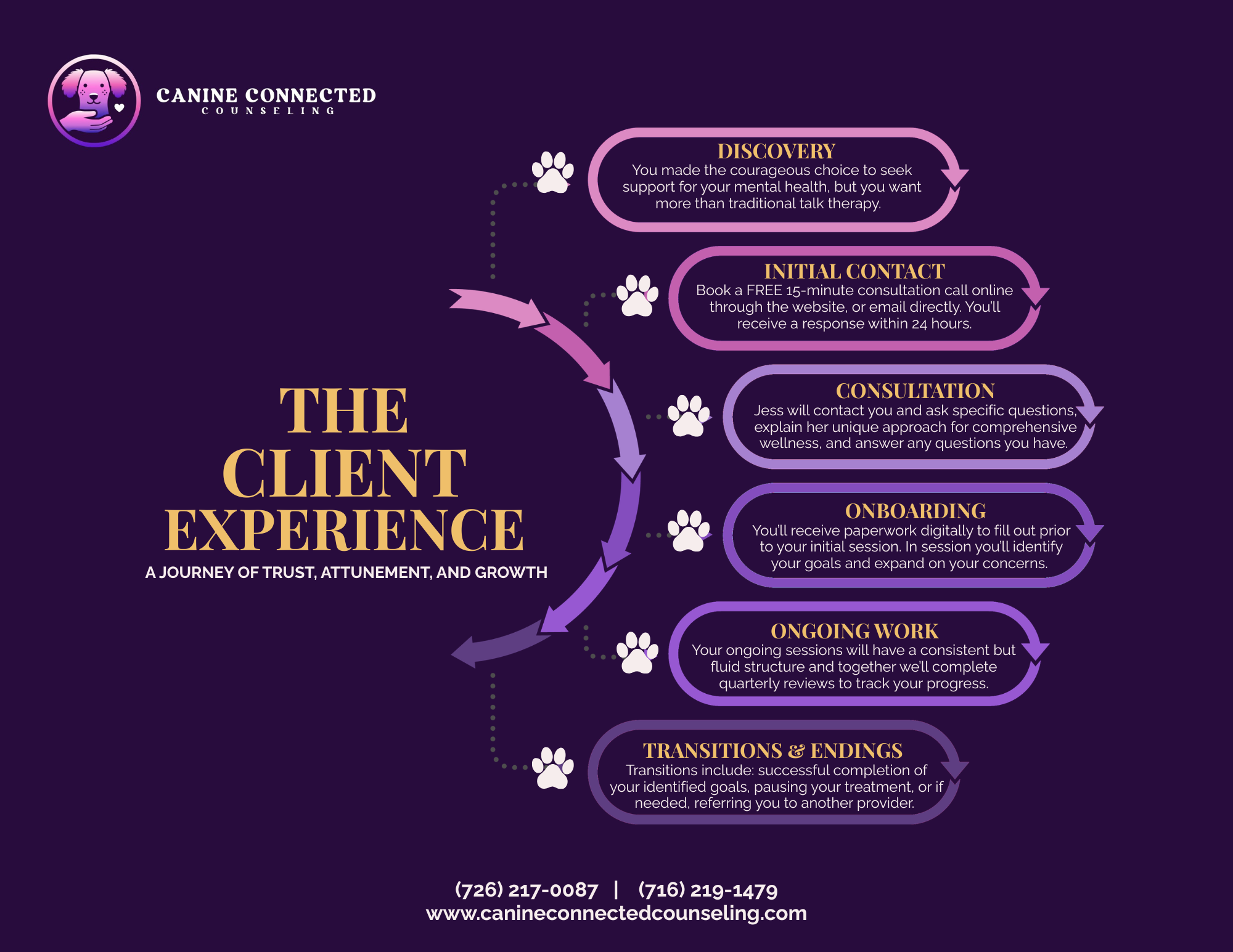
The Discovery Call
A phone call that gives you 15 minutes to decide if you connect with the therapist.
That can feel really scary and important and heavy, so let’s break it down.
The first couple of minutes we will focus on what’s prompted you to seek out therapy at this time.
The next few minutes we focus on identifying what would improvement or success look like for you and what your overall goals are for therapy.
Then we will share our approach to therapy, explaining how we utilize evidence-based animal-assisted therapy and other integrative therapies to create a customized and unique treatment experience. This helps you decide if our therapeutic approach is the right fit for your needs. We want you to feel safe and supported.
Lastly, if you are comfortable with continuing, we will discuss the logistics of therapy: the frequency you would like to attend therapy, how long your preferred session would be, and the private pay business model. We will also answer any lingering questions. Lastly, we will schedule your initial diagnostic evaluation.
The Initial Evaluation
A 60-minute session to expand upon your presenting concerns and gather important historical details. Additionally, we will discuss your history with animals and review the professional agreement regarding our animal co-therapists before introducing them to you.
In this session we will ask for basic information regarding your current symptoms to better understand when they started and how much they impact your daily life. We will also assess your lethality risk and address any suicidal or self-harming behaviors.
Then we will gather information about your family’s mental and physical health, your childhood development, and note any significant life events (without going into further detail). Then we will ask more about your current daily life, your employment status, hobbies, alcohol and drug use, and previous counseling experiences.
The Second Session
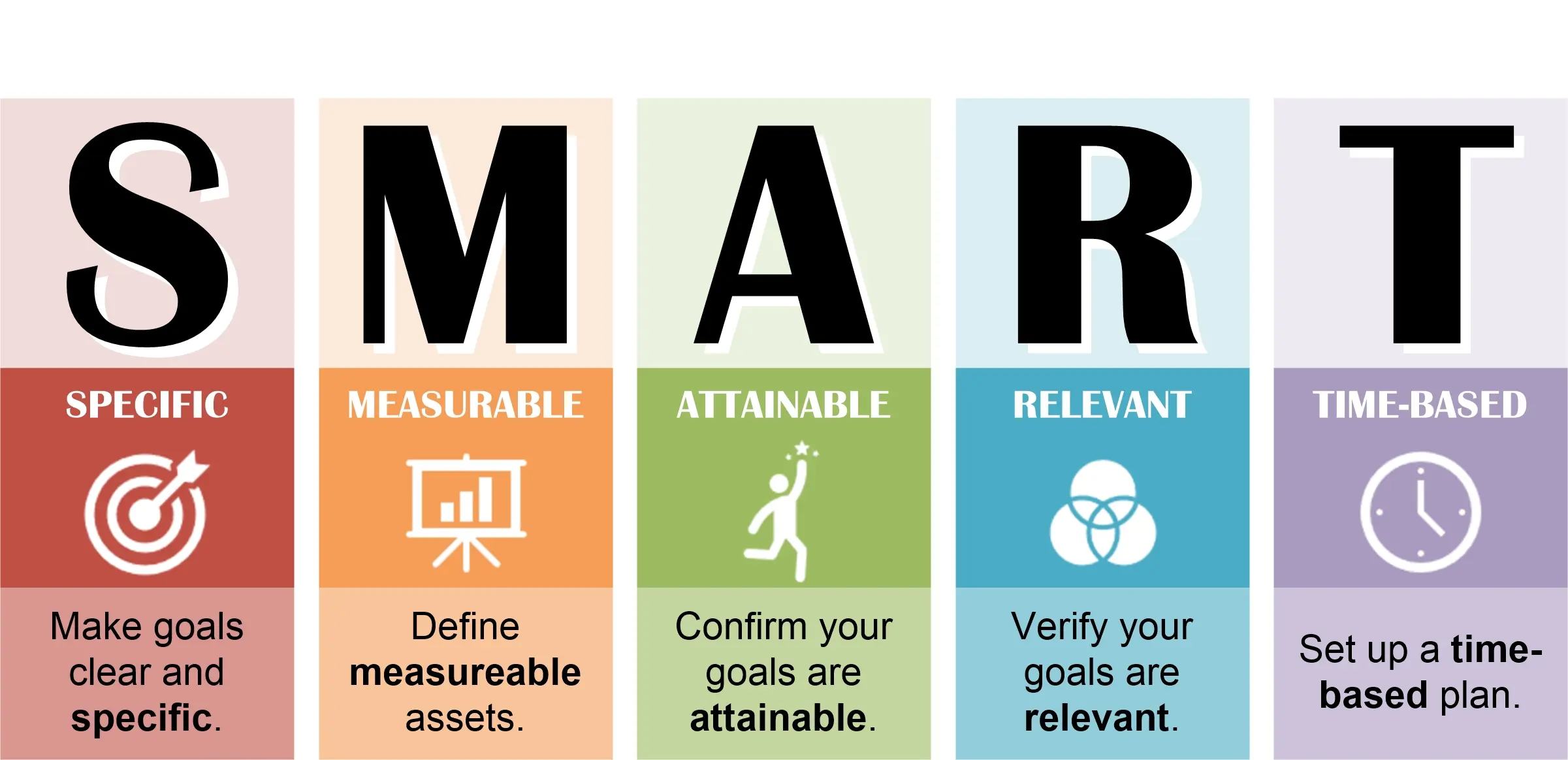
This session runs between 45 and 60 minutes and focuses on creating a custom, individualized treatment plan that outlines your goals for therapy and the actionable steps we will utilize to reach those specific goals. We create goals using the SMART system.
Furthermore, we will also identify standard assessments that may be useful in clarifying your symptoms' timeline and influence. These assessments can also help us understand how your nervous system is responding to the current stressors. Some may be completed in session together, and some you may be given electronically to complete between sessions. We can then utilize these initial assessments as a quantitative way to measure progress throughout treatment.
Ongoing Therapy Sessions
Once the treatment plan and any assessments are completed, we will begin to have more predictable sessions that follow a general structure of (1) Check-in, (2) Review Last Session, (3) Processing/Interventions, and (4) Planning.
We do a brief check-in to determine if there are any immediate needs or life changes that must be addressed first. Typically, follow-up sessions will always build upon the previous session. Picking up where we last left off.
We will make a plan at the end of each session outlining what you may need to do in between sessions and discuss how the next session will build upon and expand on your current progress. You can request more structure or less structure depending on your needs and comfort levels.
The Office Space
Sometimes the most intimidating part of attending therapy is going someplace new and not knowing what to expect. To alleviate that insecurity and increase your confidence, we have provided you the video below. Take a virtual tour of our office space; we show you where to check in for your appointment and where the office is located in the building.
At Canine Connected Counseling, we want you to feel supported and safe as you take on this new wellness journey. Knowing where you’re going is just one of the ways we support you.
Take a virtual tour of the office space.
Conclusion
Therapeutic counseling services are valuable to support and enhance your mental wellness and overall well-being. Everybody can benefit from therapy, but oftentimes the stigma surrounding mental health and sometimes previous, unfortunately bad, experiences can prevent us from ever seeking out mental health services. By explaining what the client experience is like, we can reduce some of the unknowns that can overwhelm potential clients.
It truly is an honor to be a part of your mental health and wellness journey.
Call our office today at (716) 217-0087 or book a Discovery Call online today. We would love to support you.
No AI content was utilized in this blog post.