The Power of Paws: A Therapist’s Reflection
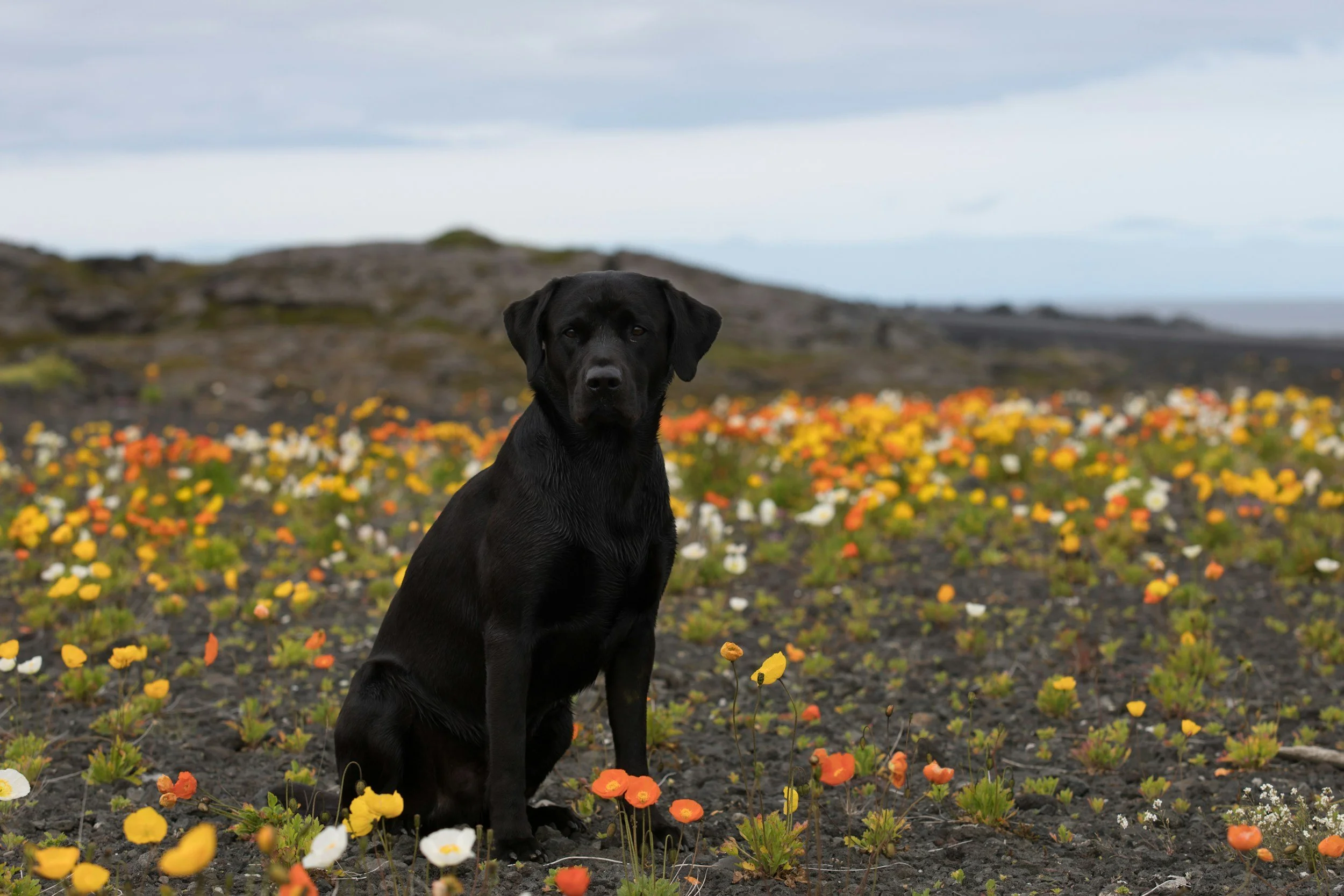
My first teacher in life was a dog.
She was a beautiful Black lab named Cynda, who taught me the importance of consent, respecting boundaries, and advocating for oneself, not to mention she demonstrated endless patience with my bountiful childish curiosity.
My earliest memory is of Cynda sneaking into my room when I was maybe 2 or 3 years old, coming up to my crib and huffing and puffing to wake me up. I began to babble, and soon after, my mom was in my room, and we made our way downstairs to make breakfast.
She knew if I woke up, Mom woke up, and food was served in short order.
Clever girl.
My mom and Cynda had a special bond that was clear to see. It was my first experience witnessing the human-animal bond, and it has always influenced how I relate to my dogs today. My mom created a safe haven for Cynda, respecting her need for space from a young child. It was a part of the house I was not allowed to intrude on. If Cynda wanted space, she knew she could get it by asking my mom. Through regular interactions with this beautiful Black lab and Mom supporting through reflection, I was intuitively learning how to read body language, learning how to be empathetic towards another sentient being, and unknowingly experiencing an animal-assisted intervention.
The best counselor in my life was a dog.
He was a tri-colored shih tzu, we named Hunter, who had the personality of an old curmudgeon, set in his ways and little grumpy, but he had a heart of gold. He didn’t ask for much, just an endless supply of naps and treats, and he loved his people.
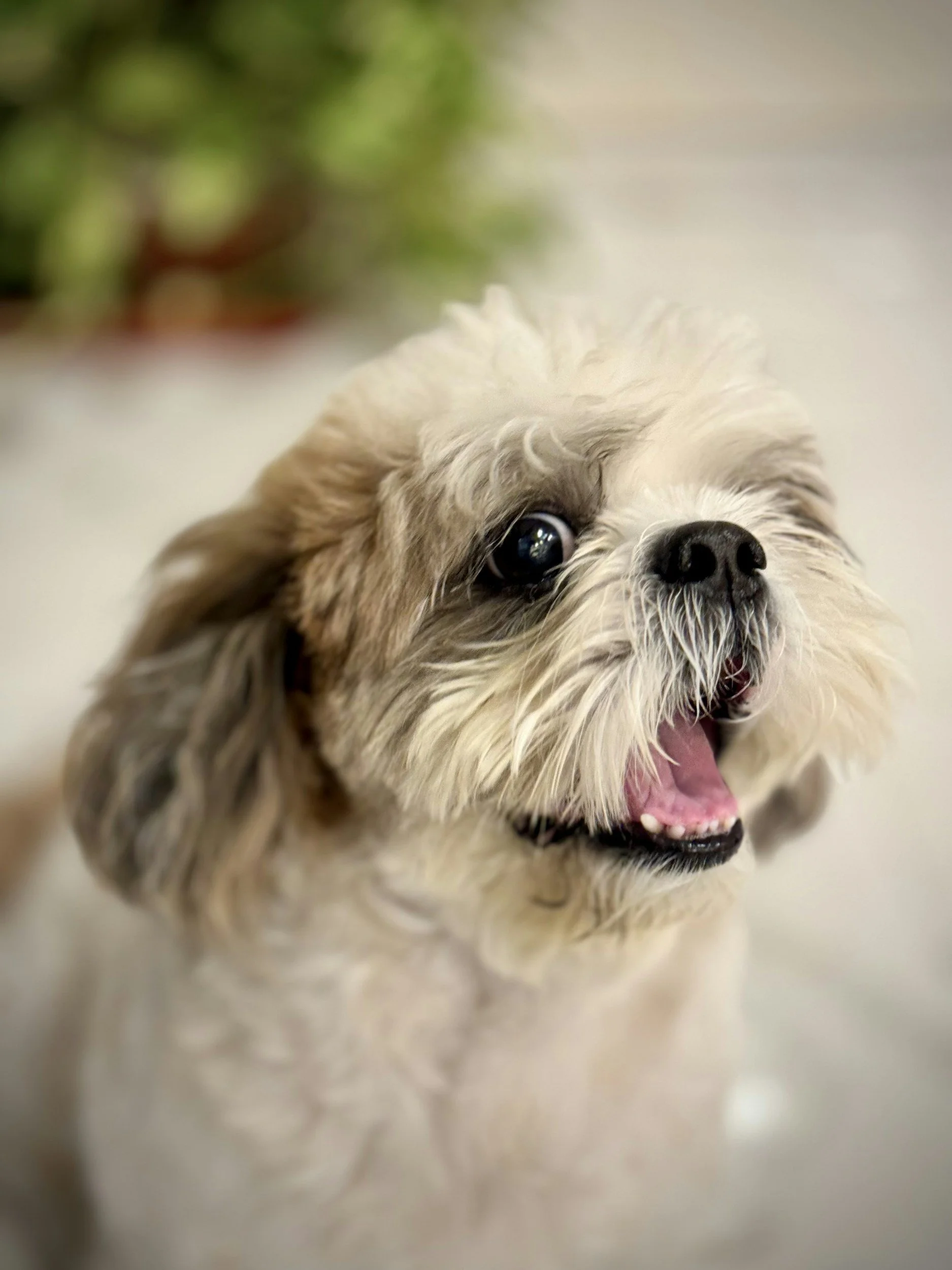
He also came into my life at a really tough point in my teenage years. I was battling chronic pain and other unexplained symptoms after contracting the H1N1 virus (COVID’s original ancestor, aka “swine flu”) that pulled me from my varsity sports, impacted my ability to attend my junior year, and completely altered my life plan. At that time, I was stuck in the dark, and the intrusive thoughts were overwhelming. Then my parents got Hunter, and suddenly I had moments of joy and laughter, and there was someone who needed to be cared for, and I could do it. Even when I had limited mobility, I could care for and love Hunter; his love was unconditional.
Hunter also taught me to keep fighting even when the odds are not in your favor. At only 6 months old, only a couple months after we welcomed him into our home, he got sick—life-threateningly sick—and it was a miracle he survived. He required six blood transfusions and a two-week stay in the veterinary ICU to stabilize. We were told by all accounts he should have not made it. But he did. However, a year later he relapsed and again had to fight for his life. Two blood transfusions and a week in the hospital—he again beat the odds.
If Hunter could fight, so could I. After almost a year of unmanaged symptoms, I was finally diagnosed with fibromyalgia, chronic fatigue syndrome, and POTS. Hunter was with me as I had to learn and create a new normal: never judging or expecting specific metrics to be met, he was just a steady presence in the storm, a partner to remind me I wasn’t alone.
He was my first (unofficial) therapy dog.
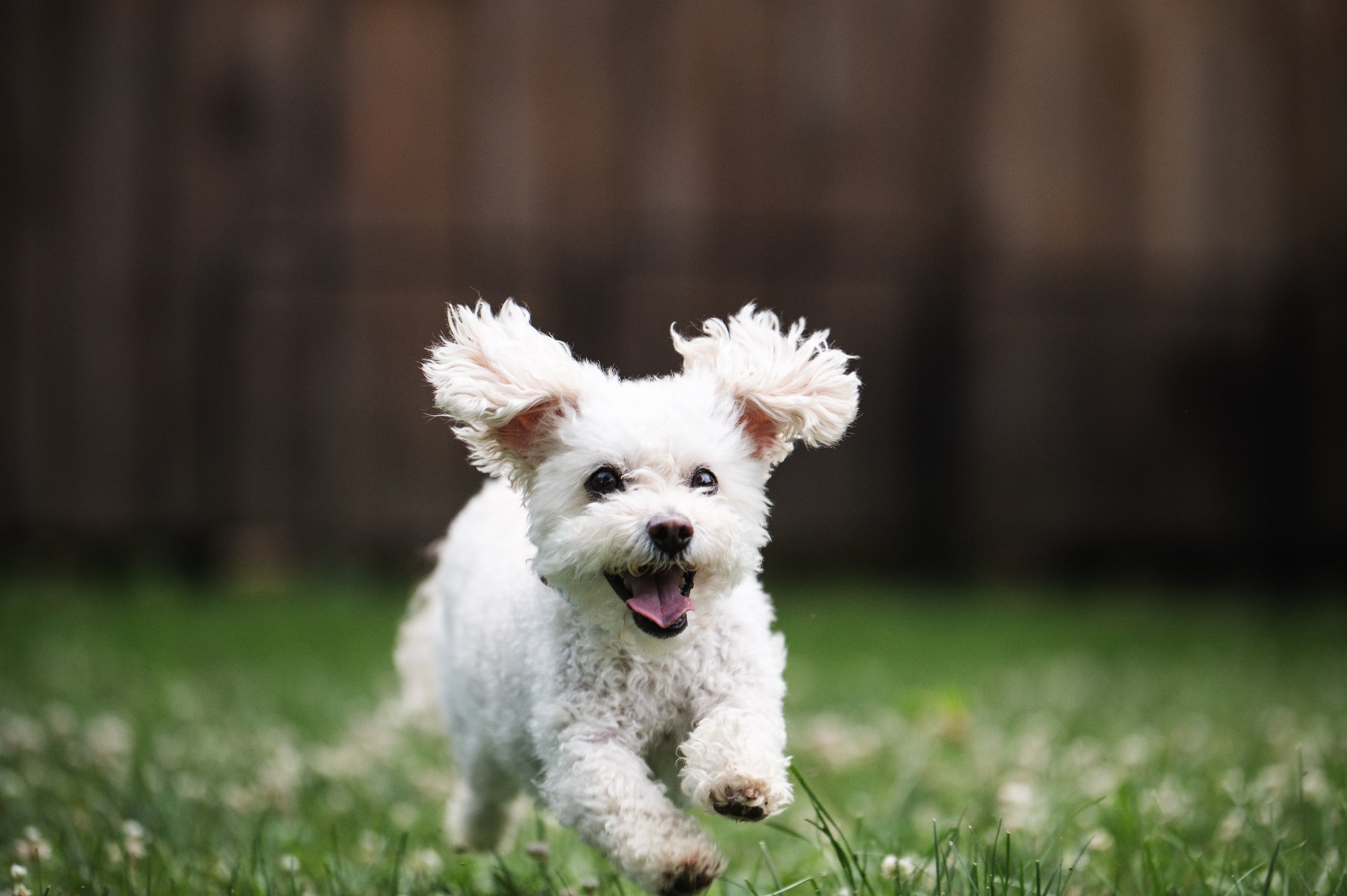
The greatest gift in my life is a dog.
Before Riley, I was your average companion pet home. We did basic obedience and hoped for the best. No dog sports. No titles. No competitions. No home-cooked meals. No preventative physical therapy, water therapy, fitness evaluations, or chiropractic care. I wasn’t part of the dog world.
Riley changed all of that.
Her behavioral rehabilitation took years, but it was so worth every penny and every early morning home training. Watching her transform from a muzzled and fearful dog to a thriving, confident, and sassy personality has been a privilege to witness. Watching her grow and flourish inspired and motivated me.
She is my soul dog.
When we became a therapy dog team, it all came full circle.
She brings her history with her into every therapy session, not just the trauma, but the healing too. Together we showcase the amazing power of connection and attunement through the human-animal bond and our animal-assisted interventions.
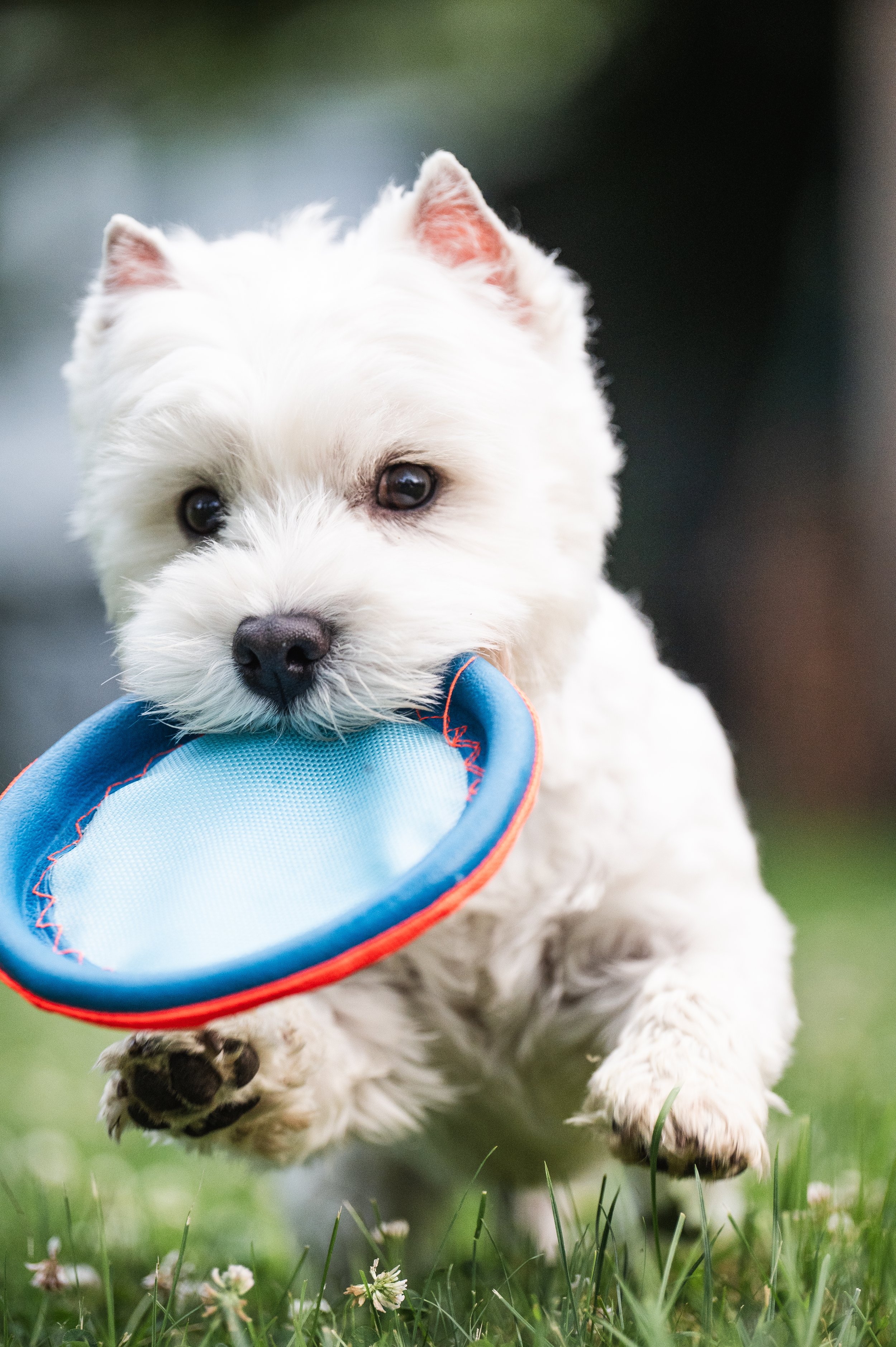
The clearest communicator in my life is a dog.
Westley is a ball of energy, with a heart of gold, who always wants attention, and he is not afraid to demand it. He will escalate his behaviors until he gets the attention he seeks. Anyone who has worked with younger children will tell you behaviors are communication, and the demand is for connection.
When Westley wants connection with me, he will behave in a way that keeps me in the present moment. He has quite literally pawed my phone out of my hand if I’ve doom scrolled too long; he has also had full-blown “conversations” with me, or he will offer some of his favorite tricks like sit pretty, high fives, and nose boops.
Westley’s wants and desires are very easy to understand because of the way he emotes and behaves; you can literally see the gears turning in his head as he problem-solves situations, and his behaviors are purposeful. If he is hungry, he goes to his food bowl and paws it and then stares. If that doesn’t work, he goes to the fridge and scratches at the door because he knows his food is in there.
He is communicating without words.
A completely different species is successfully communicating with me in a way that is easy to understand.
That is profoundly beautiful and inspiring.
Conclusion
Dogs have profoundly influenced my life and were present for some of the most important life events that shaped me into the therapist and person I am today. The skills I was formally trained in at college and professional trainings were built upon the foundations laid down by these amazing canines. Without them there would be no Canine Connected Counseling.