What is Pet Therapy?
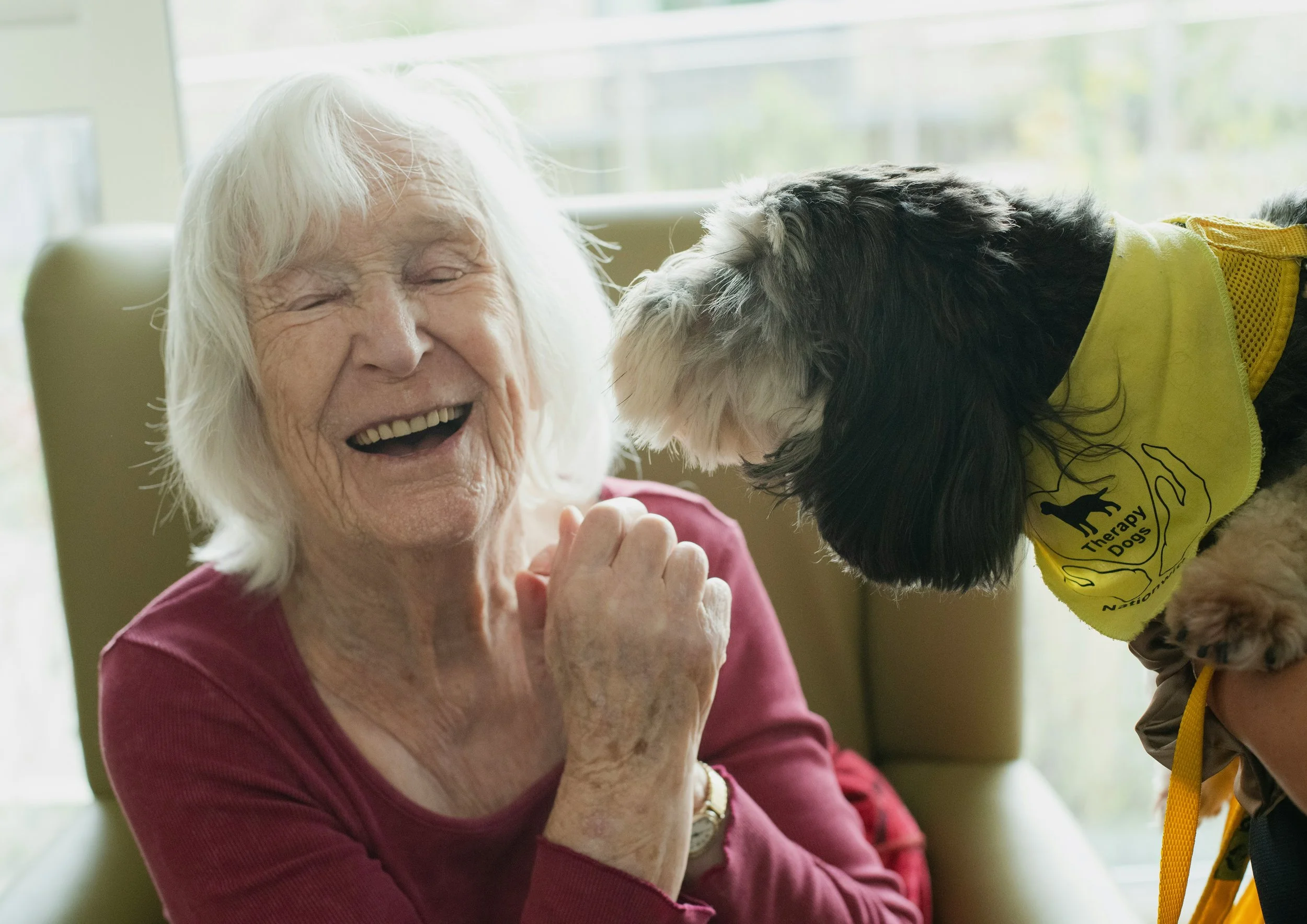
Dogs have been a part of human history for thousands of years and are one of the most popular companion animals in the world. The benefits of animal companionship on humans' well-being and emotional resiliency are well documented. Dogs particularly provide companionship and protection, and many even have vital roles partnering with human handlers to complete essential jobs for society.
The Human-Animal Bond Research Institute (HABRI) has been advancing the field of animal-assisted interventions and human-animal connection through science, education, and advocacy to emphasize the vital role of the human-animal bond in the health and well-being of people, pets, cultures, and communities. HABRI (2024) reported that owning pets can do the following:
Pets reduce feelings of loneliness
Pets encourage mindfulness and focus
Pets foster community and connection
Pets encourage healthy habits, not just physical wellness
Pets support resiliency and recovery
Working Dogs
The working dogs category encompasses a vast array of roles and tasks that assist humans. As mentioned above, working dogs include breeds known for herding, protection, and detection. According to the AKC, working dogs are often quick learners, strong, watchful, alert, and protective. Some of the breeds included in this class are Border Collies, Great Danes, Belgian Malinois, Dutch Shepherds, Mastiffs, Great Pyrenees, Anatolian Shepherds, Huskies, Rottweilers, Cane Corsos, and Doberman Pinchers. Typical jobs include livestock herding dogs, sled-pulling dogs, livestock guardian dogs, search and rescue dogs, police dogs, and scent detection dogs (drugs, explosives, cadavers, etc.). These are high-energy large-breed dogs that require experienced handlers knowledgeable about how to train them and provide them with a job to alleviate boredom or frustration.
Service Dogs
Service dogs are more than just family or handler companions, although they still provide that to their handlers and family members. They have extensive obedience training in addition to the specialized task training for their handler’s specific disability. Common tasks for service dogs include guiding the blind, medical alerting for the chronically ill, physical mobility assistance, and psychiatric support. The International Association of Assistance Dog Partners (IAADP) outlines the extensive list of tasks service dogs can perform based on their handler’s disability. You can view the list of tasks HERE.
According to the American with Disabilities Act (ADA), service animals can be dogs of any breed and/or stature and must be trained to perform a task directly related to a person’s disability (ADA, 2024, pg. 2). Eligible disabilities include Type 1 diabetes, blindness, deafness, epilepsy, CPTSD, autism, and autoimmune/dysautonomia conditions. Service dogs are not required to be certified through a professional training program, nor are they required to wear identification that indicates they are service dogs. However, many handlers prefer to have some form of identification on their service animal, most commonly a vest.
Service dogs are allowed in hospitals, restaurants, retail businesses, hotels, and schools under the ADA (ADA, 2024, pg. 3). These dogs are allowed in businesses even if they have a “no pets” policy (ADA, 2024, pg. 1). Staff are allowed to ask if the dog is a service dog and what task it is trained to do; they cannot ask for documentation or to have the task demonstrated. The only exception to removing a service dog from their handler would be if the service dog would “fundamentally alter the nature of the goods, services, programs, or activities provided to the public” (ADA, 2024, pg. 5). For example, the dog may be allowed in the hospital but not be allowed into the operating room while its owner receives surgery, as it would alter the sterilization of the operating room (ADA, 2024, pg. 5).
State and local governments often require that service dogs be up-to-date on their vaccinations and licensed in the town/municipality the owner resides in (ADA, 2024, pg. 6). In New York State you can obtain a service dog in a couple of different ways, including obtaining a dog and training it yourself, purchasing a dog trained by a professional service dog organization, or having a trainer help select and train your dog with the intention of making it a service animal (The Service Dogs, 2022).
Therapy Dogs
According to the American Animal Hospital Association (AAHA) (2021), “therapy dogs promote improvement in human physical, social, emotional, or cognitive function and functions in either group or individual settings. By providing comfort and affection, therapy dogs play a role in animal-assisted intervention (AAI) that helps people with or without diagnosed or physical conditions.”
Therapy dogs are allowed in hospitals, schools, nursing homes, and libraries for the emotional and physical benefits of residents, staff, and clients through volunteering. However, they are not protected under the ADA and generally have no further access to the public compared to companion animals/pets. However, therapy animals must be certified through a recognized therapy dog certification organization like PetPartners(formerly the Delta Society), the Alliance of Therapy Dogs, or RocDog Inc.The American Kennel Club (AKC) currently recognizes 180 different therapy dog organizations in the U.S. (Serpell, 2020).
It’s important to understand that therapy dogs are companion dogs first. They are beloved by their family, who graciously share their dog with the community, and need to be respected and cared for properly. As more research on therapy dogs is completed, animal welfare and ethics have been topics of priority. Most therapy dog organizations have guidelines and rules that handlers must follow. On average, therapy dog visits are limited to two hours max; if the therapy dog is displaying signs of distress or fatigue, handlers are to end visits immediately regardless of how much time has elapsed. Handlers often receive training on how to advocate for their canine partner effectively during the onboarding process with a therapy dog organization.
Emotional Support Animal (ESA)
Emotional support animals (ESAs) “provide comfort by just being with a person," but they have not received any formal training for a specific job or task and are not protected under the ADA. ESAs and their handlers have limited accommodations and protections under the Fair Housing Act and the Air Carrier Act.
According to Fine (2019), “ESAs provide emotional comfort without performing special tasks for their partner with disabilities” (pg. 62). However, they “are required to behave in public” (Fine, 2019, pg. 62). This designation has been controversial with the public because some handlers abuse the ESA designation to bring their poorly behaved dogs with inappropriate temperaments into public businesses with them.
Conclusion
Dogs are amazing companions that have been part of human evolution for thousands of years and, as such, have become integral members of our families and communities in a variety of different roles. It’s important to understand the difference between these roles, as there is different etiquette for interaction. Working dogs are very different from therapy dogs, who are different from service dogs. However, among all the roles and organizations, one thing remains true. Dogs are sentient and intelligent beings with needs and preferences that should be honored by their handlers. Animal welfare is essential to ensure the longevity of the dog.
No generative AI was used to create this blog post. This is 100% human researched and written.
About the Author

Jessica has over a decade of clinical social work experience. She started in community mental health in rural WNY and later became the director of an entire social work department for a nonprofit in Buffalo, NY. Jessica has cultivated a career focused on child therapy and neurodiversity-affirming care. Her numerous certifications and specific niches reflect her intentionality in curating her scope of practice.
Today, Jessica enjoys being in private practice, where she merges her love for dogs with her clinical expertise to enhance the therapeutic experience for her clients. Jessica lives in Lancaster, NY, with her husband and two dogs. Jessica identifies as proudly neuro-spicy after receiving a late diagnosis of ADHD two years ago. In addition, she is diagnosed with hEDS, POTS, and fibro. When not dog training, competing, or working, you can find her curled up with a good book or taking quiet vacations with her family and friends.
Book a free 15-minute discovery call with Jessica Allen, LCSW, C-AAIS, AAT-I, today at HERE.
References
American Animal Hospital Association (2021). Therapy Dogs. https://www.aaha.org/resources/2021-aaha-working-assistance-and-therapy-dog-guidelines/therapy-dogs/
American with Disabilities Act. (2010, September 15). Ada Requirements: Service
Animals. ADA.gov. (1-8).https://www.ada.gov/resources/service-animals-2010-requirements/
American with Disabilities Act. (2024, October 29). Service animals. ADA.gov. (1-7). https://www.ada.gov/topics/service-animals/
Americans with Disabilities Act. (2020, February 28). Frequently asked questions about service animals and the ada. ADA.gov. (1-15)
https://www.ada.gov/resources/service-animals-faqs/
American Kennel Club. (n.d.) Working Group. https://www.akc.org/dog-breeds/working/page3/
Fine, A. (2019). Living with assistance dogs and other animals: Their therapeutic roles and psychosocial health effects. The Handbook on Animal-Assisted Therapy (5th ed.). (62-63).
Human-Animal Bond Research Institute (2024, May). How Pets Impact Our Mental Health.https://habri.org/blog/how-pets-impact-our-mental-health/
Serpell JA, Kruger KA, Freeman LM, Griffin JA and Ng ZY (2020) Current Standards and Practices Within the Therapy Dog Industry: Results of a Representative Survey of United States Therapy Dog Organizations. Front. Vet. Sci. 7:35. doi: 10.3389/fvets.2020.00035
The International Association of Animal Assistance Dog Partners. (n.d.) https://iaadp.org/membership/iaadp-minimum-training-standards-for-public-access/tasks-performed-by-guide-hearing-and-service-dogs/
The Service Dogs. (2022). NYS Service Dog Laws & Information. YouTube. https://www.youtube.com/watch?v=WtUinr0ozA8
Walker, S. (2023, December). Service Dog Vs Therapy Dog Vs Emotional Support Animal. YouTube. https://www.youtube.com/watch?v=Qf6iexmHWeM